

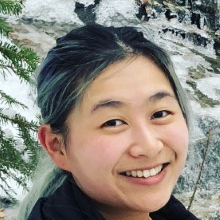
Cindy Lin
Graduate Student, Stanford University
Investigating regulators of GCase activity using CRISPR KO screens
Mutations in GBA, which encode the enzyme GCase, are one of the most common risk factors for Parkinson’s, and decreased GCase activity appears in both inherited and sporadic cases of the disease. Our lab has been working to understand what controls GBA production and activity, as it sits at a critical junction of Parkinson's disease pathology. Using CRISPR screening technology, we have identified several potential regulators of GBA that were not previously known. This work has opened new research directions for our team and points toward novel therapeutic targets. Our next steps involve confirming these regulators' roles and understanding exactly how they affect GBA in the brain, which can ultimately contribute to developing more targeted approaches for addressing Parkinson's Disease.
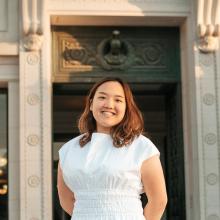
Odilia Sianto
Research Technician, Stanford University
Nonsense-mediated decay masks cryptic splicing events caused by TDP-43 loss
In frontotemporal dementia and amyotrophic lateral sclerosis, the RNA-binding protein TDP-43 is lost from the nucleus, leading to cryptic exon inclusion events in dozens of neuronal genes. We show that many cryptic splicing events have been missed by standard RNA-sequencing analyses because they are substrates for nonsense-mediated decay. By inhibiting nonsense-mediated decay in neurons we unmask hundreds of novel cryptic splicing events caused by TDP-43 depletion, providing a new picture to TDP-43 loss of function in neurons.
CLICK TO DOWNLOAD EVENT POSTER
About the Series
The Knight Initiative for Brain Resilience hosts monthly seminars to bring together grant awardees, affiliated professors and students for a series of 'lab meeting' styled talks. Two speakers will discuss their brain resilience research, experiences in the field, and answer questions about their work.
To support our researchers' participation in this open science ‘lab-meeting style’ exchange of ideas, these seminars are not streamed/recorded and are only open to members of the Stanford community.