

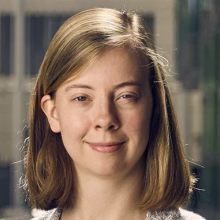
Julia Belk
Postdoc, Stanford University
Clonal hematopoiesis and the aging brain
Bio
Julia is a HHMI Hanna Gray Postdoctoral Fellow at Stanford University.
Abstract
Adult humans contain a polyclonal mixture of approximately 100,000 hematopoietic stem cells (HSCs). During aging, individual HSCs accumulate somatic alterations that can confer a fitness advantage, leading to clonal expansion. Collectively, these expanded HSC clones yield an oligoclonal mixture in the blood and bone marrow of aged humans, termed “clonal hematopoiesis”. Clonal hematopoiesis has been associated with diverse human diseases in human cohort data, some of which have been causally validated in disease models. My recent work has focused on the role of clonal hematopoiesis in the brain (Bouzid*, Belk* et al., Nature Medicine 2023; Matatall et al., Cell Stem Cell 2025; Belk et al., unpublished). In this talk I will share what we have learned about brain aging, Alzheimer's disease, and the origins of human microglia from studying clonal hematopoiesis.
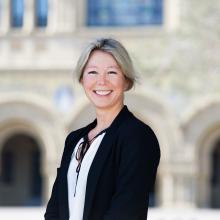
Alina Isakova
Director, Stanford University
The molecular landscape of human brain aging: Known features and unexpected findings
Bio
Dr. Isakova oversees the operations of the Brain Resilience Laboratory and the research projects conducted under the Knight Initiative. She leads the initiative’s effort in creating a detailed molecular map of human brain aging and identifying physiological pathways of brain resilience.
Alina obtained her BSc in Applied Physics and her MSc in Biophysics from Kharkiv National University, Ukraine. She then pursued her doctoral training in the lab of Professor Bart Deplancke at the Swiss Federal Institute of Technology Lausanne (EPFL), Switzerland, where she earned a PhD in Biotechnology and Bioengineering. Alina has broad expertise in molecular biology, neurosciences, bioengineering and data analysis. Prior to joining the Knight Initiative, Alina did her postdoc with Professor Stephen Quake at Stanford University.
Abstract
Understanding how the human brain changes across the aging continuum requires approaches capable of capturing its broad regional diversity and underlying molecular complexity. At the Brain Resilience Lab, we have launched an effort to systematically phenotype human brain tissue across age, integrating extensive anatomical coverage with high-resolution molecular profiling. This work aims to generate a clearer view of the molecular landscape that accompanies aging and to identify features that may help explain the varied trajectories observed across individuals and brain regions.
In this talk, I will present an overview of our ongoing efforts to map molecular patterns across the human brain, highlighting both well-recognized features and findings that point to additional layers of organization not readily visible through traditional methods. By examining tissue across multiple regions and age groups, this work begins to outline how molecular states differ across the brain and how these differences may relate to age-associated biological changes.
Our broader goal is to build a foundation for future studies of aging and resilience by creating a framework that captures the complexity, diversity, and spatial organization of the human brain. This presentation will summarize the progress to date and the emerging insights from this large-scale phenotyping initiative.
CLICK TO DOWNLOAD EVENT POSTER
About the Series
The Knight Initiative for Brain Resilience hosts monthly seminars to bring together grant awardees, affiliated professors and students for a series of 'lab meeting' styled talks. Two speakers will discuss their brain resilience research, experiences in the field, and answer questions about their work.
To support our researchers' participation in this open science ‘lab-meeting style’ exchange of ideas, these seminars are not streamed/recorded and are only open to members of the Stanford community.