

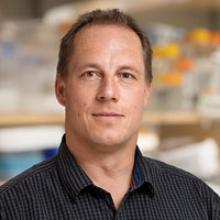
Jan Karlseder, PhD
Salk University
Escape from replicative crisis and immortalization precedes complex genome evolution
Bio
Jan Karlseder obtained his PhD from the University of Vienna, Austria, where he studied the cell cycle regulation of transcription. He was a postdoctoral fellow at the Rockefeller University, NY, where he investigated mechanisms of telomere length regulation and protection. In 2002 he established his laboratory at the Salk Institute for Biological Studies in La Jolla, California, where he studies the links between DNA damage signalling and repair, telomere dynamics and cancer formation. He was promoted to the Donald and Darlene Shiley Chair Professor in 2011 and is currently the Director of the Glenn Center for Research on Aging, Chief Science Officer and Senior Vice President of the Salk Institute.
Abstract
Shortening of telomeres restricts the proliferative capacity of human somatic cells by inducing replicative senescence and crisis. During cancerous transformation, premalignant cells must overcome these barriers and acquire replicative immortality. Single-cell DNA strand-specific genome sequencing of crisis cells revealed extreme genome instability characterized by complex chromosomal abnormalities. Unexpectedly, spontaneously emerging postcrisis clones showed relatively few and simple structural variants. However, with accumulating divisions following crisis escape, the genomes of immortal postcrisis clones evolve and amass genomic alterations, including tetraploidization events with subsequent losses and gains of individual chromosomes. Our data point towards a new model of tumorigenesis in which crisis acts as a strong selective barrier against cells with aberrant karyotypes, and in which high karyotypic complexity is acquired after immortalization and crisis escape.
About the Series
This collaborative seminar is a joint effort of the Knight Initiative for Brain Resilience and the Paul F. Glenn Center for Biology of Aging Research.
To support our researchers' participation, these seminars are not streamed/recorded and are only open to members of the Stanford community.