

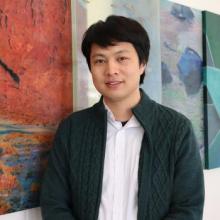
Jian Xiong
Knight Initiative Brain Resilience Postdoctoral Scholar, Stanford University
Regulation of Bis(Monoacylglycero)Phosphate in Neurodegeneration
Bio & Abstract coming soon
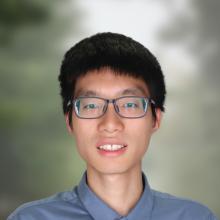
Fei Deng
Postdoc, Stanford University
Dynamic cholinergic modulation of cognitive function in Parkinson’s disease
Bio
Fei Deng is a postdoc in Scott Owen’s lab in the Neurosurgery Department. He is interested in neuromodulation and its applications to neurological diseases. He earned his Ph.D. from Peking University in 2023, where he developed genetically encoded serotonin sensors under the supervision of Professor Yulong Li. With a strong background in monitoring neuromodulators using advanced sensors and imaging techniques, he is dedicated to uncovering how neuromodulators shape complex brain functions and behaviors, currently focusing on the dynamics of acetylcholine signaling in the striatum during flexible learning and restorative interventions targeting the brain’s cholinergic system in Parkinson’s disease.
Abstract
The ability to adapt behavior in changing environments declines with normal aging and is further impaired in patients with Parkinson’s disease (PD). Dysregulated dopamine (DA) and acetylcholine (ACh) signaling in the striatum is thought to underline this deficit in flexible learning and represents an important therapeutic target. To uncover dynamics and functions of DA and ACh during flexible learning, I combined a two-spout licking task with dual-color fiber photometry recordings in healthy mice and a 6-OHDA model of PD. In healthy mice, unrewarded licking evoked a prominent rebound in ACh signaling. Strikingly, this ACh rebound was absent in the PD model, suggesting that it may play an important role in flexible learning. Indeed, pharmacological blockade of cholinergic signaling reduced both task engagement and switching ability, primarily through M4-type acetylcholine receptors. Dopamine depletion in the 6-OHDA PD model similarly impaired task performance, by reducing engagement and diminishing switching ability. Together, these findings identify dynamic cholinergic signaling as a key contributor to behavioral flexibility and suggest that restoring ACh modulation or its downstream signaling pathways may offer a strategy to alleviate PD-related cognitive decline while minimizing side effects.
About the Series
The first Monday of each month, the Knight Initiative for Brain Resilience will host monthly seminars to bring together awardees, affiliated professors and students for a series of talks. Two speakers will discuss their brain resilience research, experiences in the field, and answer questions about their work.
To support our researchers' participation, these seminars are not streamed/recorded and are only open to members of the Stanford community.