

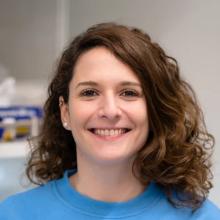
Lola Moya Garzón
Postdoc, Stanford University
Talk title to be announced
Bio & Abstract coming soon

Annie Goettemoeller
Dr. Annie Goettemoeller, Postdoctoral Researcher, Soltesz Lab, Department of Neurosurgery, Stanford University
Vulnerability of Entorhinal-Dentate Gyrus Circuit Communication in Alzheimer's disease
Bio
Dr. Goettemoeller is a postdoctoral researcher in the Soltesz Lab at Stanford University. Her research explores the functional specialization of hippocampal inhibitory circuits, spanning synaptic physiology, circuit connectivity, and in vivo network dynamics. Using patch-clamp electrophysiology alongside in vivo silicon-probe recordings and voltage imaging, she investigates how distinct interneuron populations coordinate brain states and how these circuits become vulnerable in Alzheimer’s disease.
Abstract
Alzheimer’s disease (AD) is the most prevalent neurodegenerative disease, yet current treatments are unable to prevent its initiation and progression. Although brain regions of early vulnerability have been known for over 30 years, how the disease propagates from these regions throughout the rest of the brain remains unclear. Within the cortex, the Entorhinal Cortex (EC) is noted as one of the most vulnerable regions in Alzheimer’s disease, displaying prominent pathologies and severe neurodegeneration early in disease progression. Interestingly, recent research has focused on the role of physiological dysfunction in AD, which has also been suggested to arise early in the EC. Furthermore, it has been suggested that EC physiological dysfunction is either a cause or catalyst for propagation of AD-related pathology spreading into the hippocampus and, ultimately, throughout the rest of the brain. As the EC provides critical input to the dentate gyrus (DG), disruption of EC-DG communication may represent an important early mechanism linking circuit dysfunction to memory impairment and disease progression. Here, we explore how early changes in EC-DG circuit function may contribute to AD pathophysiology. Understanding how these circuit dynamics become disrupted may provide insight into how early physiological dysfunction contributes to cognitive impairment and identify opportunities for restoring circuit function before widespread neurodegeneration occurs.
About the Series
The first Monday of each month, the Knight Initiative for Brain Resilience will host monthly seminars to bring together awardees, affiliated professors and students for a series of talks. Two speakers will discuss their brain resilience research, experiences in the field, and answer questions about their work.
To support our researchers' participation, these seminars are not streamed/recorded and are only open to members of the Stanford community.