

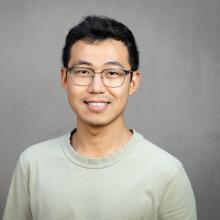
Shuke Xiao
Postdoc fellow, Stanford University
MCT6 Gates Gut-Derived Glycolytic Signals to Control Systemic Feeding
Bio
Dr. Xiao is currently an NIH K99/R00 postdoc fellow in Dr. Jonathan Long's lab at the Deparment of Pathology and ChEM-H institute at Stanford University. Dr. Xiao graduated from Nanjing University with a Bachelor degree in Biology, and pursued PhD at Yale University under the supervision of Dr. John Carlson. He has a broad interest in understanding the chemical languate of tissue crosstalk and the molecular machineries that connects cellular metabolism to organismal physiology.
Abstract
Metabolites are increasingly recognized as circulating signals that communicate cellular metabolic state across tissues, yet the mechanisms that couple intracellular production to organism-wide action remain poorly defined. Using the anorexigenic metabolite Lac-Phe as a tractable system, we show that the orphan gut-enriched transporter MCT6 (SLC16A5) is a physiologic Lac-Phe exporter that controls both metabolite release into the bloodstream and its downstream systemic effects. MCT6 transports Lac-Phe in vitro and is necessary and sufficient for cellular Lac-Phe efflux. Global or intestinal epithelial-specific deletion of MCT6 reduces metformin-inducible circulating Lac-Phe levels and confers resistance to metformin-associated weight loss on a high-fat diet. Bypassing the transport defect with exogenous Lac-Phe normalizes the body weight phenotype of MCT6-KO mice. These data deorphanize MCT6, connect gut lactate metabolism to metformin pharmacology, and establish metabolite release to blood as a checkpoint that determines whether an intracellular biochemical state is converted into a systemic signal.
Lun Wang
Postdoctoral Scholar, Stanford University
Talk Title to be announced
Bio & Abstract coming soon
About the Series
The first Monday of each month, the Knight Initiative for Brain Resilience will host monthly seminars to bring together awardees, affiliated professors and students for a series of talks. Two speakers will discuss their brain resilience research, experiences in the field, and answer questions about their work.
To support our researchers' participation, these seminars are not streamed/recorded and are only open to members of the Stanford community.