

The first Monday of each month, the Knight Initiative for Brain Resilience will host monthly seminars to bring together awardees, affiliated professors and students for a series of 'lab meeting' styled talks. Two speakers will discuss their brain resilience research, experiences in the field, and answer questions about their work.
To support our researchers' participation in this open science ‘lab-meeting style’ exchange of ideas, these seminars are not streamed/recorded and are only open to members of the Stanford community.
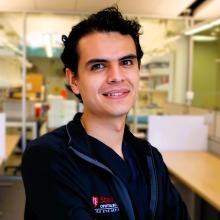
Julian Garcia
Brain Resilience Postdoc, Stanford University
The Light Side of the Force
Abstract
Glaucoma is a neurodegenerative disease of the optic nerve and represents the leading cause of irreversible blindness worldwide. Elevated intraocular pressure represents the most significant and modifiable risk factor. However, in the retina, knowledge about how mechanical stimuli are sensed and modify neuron physiology remains unclear. Recent studies show that mechanosensitive ion channels are expressed in retina and may influence neurodegenerative processes. In our preliminary data, we discovered that activation of the mechanosensitive ion channel Piezo1 in retinal ganglion cells modulates cell survival after optic nerve injury.
In this project, we will determine the role of activating and knocking out Piezo1 in a mouse model of glaucomatous injury. We will also determine the signaling pathways activated by Piezo1. Lastly, we will explore non-invasive methods of activating Piezo1 for clinical translation.
Our research will increase our understanding of how the nervous system senses and responds to pressure, as well as the mechanisms mediating neuroprotection in pressure-mediated pathology. In addition, these studies will help us investigate mechanosensitive ion channel modulation as a promising therapeutic modality for glaucoma and other neurodegenerative diseases.
Bio
Julian is a vision scientist aiming towards developing new therapies for glaucoma and neurodegenerative diseases. He received his MD with honors from Anahuac University in Mexico City where he helped to develop novel neurogenic therapies for spinal cord injury under Professor Jose Juan Ibarra and participated in developing new imaging modalities for the retina with Dr. Guillermo Salcedo at APEC ophthalmology hospital. He is now a postdoctoral fellow in Dr. Wendy Liu’s group at Stanford University and was awarded the Stanford Vision T-32 postdoctoral fellowship. Currently, Julian is studying the role of mechanosensitive ion channels in the eye and uncovering novel mechanisms of neuroprotection and regeneration in the retina.

Meena Chakraborty
PhD Candidate, Stanford University
Presenting with Bianca Palushaj and Imani Porter
The gut-immune-brain connection in Parkinson's Disease
Abstract
Since 2022, we have established a biobank of stool and blood samples from nearly 200 individuals, including patients with Parkinson’s disease and control participants, the vast majority of whom are within-household controls. To maximize the flexibility and utility of these samples, stool has been preserved in multiple formats to enable analysis of DNA, RNA, and metabolites, while blood samples have been processed to retain not only plasma and serum, but also peripheral blood mononuclear cells (PBMCs).
We will present results to be included in the first manuscript from this cohort, including the identification of specific microbial taxa associated with Parkinson’s disease using our laboratory’s novel and highly accurate method for quantifying absolute gut microbial abundances rather than relative measures (Doyle*, Reynolds*, Dvorak* et al., Nature Protocols, 2025). These microbiome findings are being integrated with RNA-seq data from PBMCs, which we anticipate will enable the generation of testable hypotheses regarding the gut-immune-brain connection in Parkinson’s disease.
Bios
Meena Chakraborty is a PhD candidate in the lab of Dr. Ami Bhatt. Her research focuses on combining computational and experimental approaches to investigate the gut-brain connection.
Bianca Palushaj is a board-certified neurologist and fellowship trained movement disorders specialist with a clinical and research focus on the microbiome-gut-brain axis in Parkinson's disease.
Imani Porter is a PhD candidate in the lab of Dr. Ami Bhatt. Her research interests focuses on uncovering the shared and distinct mechanisms of microbe-host interactions and how they reciprocally regulate one another’s genomes, particularly in the context of complex diseases such as Parkinson’s disease.