

In the 1980s, National Institutes of Health researchers uncovered a curious molecule in gila monster saliva that would eventually form the basis of blockbuster GLP-1 weight-loss drugs. Now, Stanford researchers studying healthy aging may have discovered a molecule with similar potential—hidden, this time, in the guts of one of the world’s most extreme eaters: the python.
The snakes, which can go a year without eating, produce massive amounts of a previously unknown hunger-curbing molecule after meals, a team supported by the Knight Initiative for Brain Resilience reported March 19, 2026 in Nature Metabolism.
The molecule works similarly in humans and in mice and could potentially be harnessed to address a significant problem with GLP-1 drugs, the researchers say: Around a quarter of people who start a GLP-1 drug stop taking it within a year because of side effects, which include low blood sugar, dehydration, and strong aversion to certain tastes.
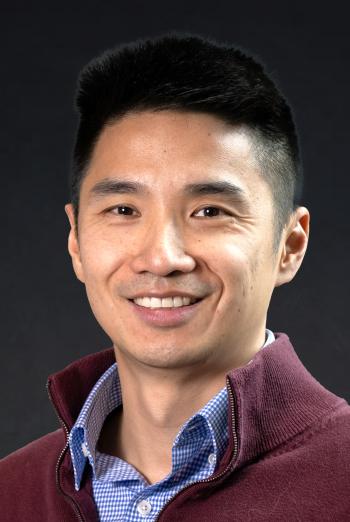
“What we're showing with this molecule is that it's able to suppress feeding, but there don't seem to be as many adverse effects,” said study senior author Jonathan Long, an associate professor of pathology at Stanford Medicine and Sarafan ChEM-H Institute Scholar.
Extreme nature
Long, an affiliate of the Wu Tsai Neurosciences Institute, says his work often takes inspiration from the extremes of nature to improve human health and aging. You could imagine, for example, that studying bear hibernation might teach us something about keeping bedridden patients healthy, and understanding a seal’s ability to dive for long periods without oxygen could potentially help treat oxygen-deprivation injuries.
“Why can't we augment our physiology with inspiration from nature for longer, better, healthier living?” Long asked.
Pythons slithered onto the scene as part of Long’s Knight Initiative-supported research studying what makes diet and exercise the most effective factors in expanding lifespan and supporting brain resilience.
Previously, his work focused on mammals, including mice and humans, which eat quite differently from each other. Mice snack almost constantly, while humans typically eat a few larger meals throughout the day. But Long wanted to study even wilder forms of feeding behavior.
“We decided if we are really serious about this idea of looking at extremes as a way of probing mechanisms in biology, then let's not limit ourselves to mammals,” Long said. “That's where the snakes come in.”
When it comes to feeding, pythons are the polar opposite of mice. They sometimes go over a year without food and break their fast by eating as much as their entire body weight in a single meal.
Snake blood
To see what they could learn from pythons’ extreme eating, Long and his colleagues looked at whether their behavior would be mirrored with an equally extreme physiological response.

First, they had pythons fast for 30 days and analyzed the molecular contents of their blood. Then, the pythons devoured a delectable meal: a rat weighing a quarter of the snake’s body weight. Afterward, the research team analyzed new blood samples from the full-bellied pythons.
In the crowd of molecules they found, one stood out.
“At the very, very top of our list was a molecule called para-tyramine-O-sulfate (pTOS) that had been very poorly studied before,” Long said, noting that previous studies suggested the molecule didn’t do anything particularly interesting in humans.
In pythons, however, the team found pTOS levels jumped 1000-fold after a meal. That’s a stark contrast to humans, where pTOS levels increased only two-fold, and mice, where the team found no pTOS at all, regardless of feeding.
When they then injected pythons and mice with pTOS itself, they found not only increased pTOS levels but also that mice—despite being steadfast snackers—ate
much less. Compared to a control group, mice given pTOS ate nearly one-fifth less food over the course of a day, and obese mice given pTOS for a month lost an average of nine percent of their body weight.
These findings suggest that the python’s gut converts food into a signal that tells the brain to stop eating—a good thing for a python, which needs to stop eating after a large meal, but potentially a bad thing for a mouse, whose survival depends on a constant search for food.
Pythons for human health
The research could benefit human health. Doctors could turn to pTOS to support first-line weight-loss medications, such as GLP-1 drugs, Long said—and with fewer side effects: Additional tests showed pTOS did not affect blood sugar, water intake, or taste aversion in mice.
The team would not have uncovered this molecule without studying animals at opposite extremes, Long said.
“If you were only using mice as a discovery system, you would have totally missed this, because mice don't even have pTOS, even though this thing has changed 1000-fold in the snakes,” he said.
Also crucial to this work was the interdisciplinary team of scientists, which brought diverse perspectives from cardiac physiology, biochemistry, and neurophysiology to the project. The research also received funding from sources including the Wu Tsai Human Performance Alliance, the Stanford Diabetes Research Center, and the Stanford University Medical Scientist Training Program.
“No single lab could have done this work. This would have been missed if it were in the classical model of single lab, single question type of science,” Long said.
Moving forward, Long plans to continue searching for discoveries hidden in other species. “Leveraging these extremes from nature could create a next era of human health optimization and disease prevention across all different domains,” he said.
Publication Details
Research Team
Study authors from Stanford University include Shuke Xiao from the Department of Pathology at Stanford Medicine, Sarafan ChEM-H, and the Wu Tsai Human Performance Alliance; Sipei Fu from the Department of Pathology at Stanford Medicine, Sarafan ChEM-H, and the Department of Biology in Stanford Humanities and Sciences; Steven D. Truong from the Department of Structural Biology at Stanford Medicine and the Department of Chemical and Systems Biology at Stanford Medicine; Veronica L. Li from the Department of Pathology at Stanford Medicine and Sarafan ChEM-H; Andrew L. Markhard from the Department of Pathology at Stanford Medicine and Sarafan ChEM-H; Mingming Zhao from the Department of Pediatrics at Stanford Medicine and the Cardiovascular Institute at Stanford Medicine; Wei Qi from the Department of Biology in Stanford Humanities and Sciences; Saranya C. Reghupaty from the Department of Pathology at Stanford Medicine, the Cardiovascular Institute at Stanford Medicine, and the Stanford Diabetes Research Center at Stanford Medicine; Jan Spaas from the Department of Pathology at Stanford Medicine and Sarafan ChEM-H; Xiaoke Chen from the Department of Biology in Stanford Humanities and Sciences; Katrin J. Svensson from the Department of Pathology at Stanford Medicine, the Cardiovascular Institute at Stanford Medicine, and the Stanford Diabetes Research Center at Stanford Medicine; Daniel Bernstein from the Department of Pediatrics at Stanford Medicine and the Cardiovascular Institute at Stanford Medicine; and Jonathan Z. Long from the Department of Pathology at Stanford Medicine, Sarafan ChEM-H, the Wu Tsai Human Performance Alliance, the Cardiovascular Institute at Stanford Medicine, the Stanford Diabetes Research Center at Stanford Medicine, and the Phil and Penny Knight Initiative for Brain Resilience.
Additional authors were from Baylor College of Medicine, the University of Colorado Boudler, Trinity College Dublin, the University of California, Davis, the University of Wisconsin-Madison, the Norwegian University of Science and Technology, St. Olavs Hospital, Australian Catholic University, and the University of Copenhagen.
Research Support
This work was supported by the Phil and Penny Knight Initiative for Brain Resilience at the Wu Tsai Neurosciences Institute, the US National Institutes of Health (R01GM029090, R01DK138518, R01DK105203 and R01DK124265, K99DK141966, K99AR081618, F32HD112123, F32HL170637, F32DK138685, T32GM142607), the Wu Tsai Human Performance Alliance, the Stanford Diabetes Research Center (P30DK116074), the Ono Pharma Foundation, the Leducq Foundation, the American Heart Association (24POST1200064 and 24POST1196199), the Stanford University Medical Scientist Training Program (T32-GM007365). The clinical trial of the Moholdt Study was supported by Novo Nordisk Foundation (NNF14OC0011493) and The Liaison Committee for Education, Research and Innovation in Central Norway (2016/29014).
Competing Interests
A provisional patent application has been filed by Stanford University on para-tyramine-O-sulfate for the treatment of cardiometabolic diseases.

