

Axel Brunger
Profile details
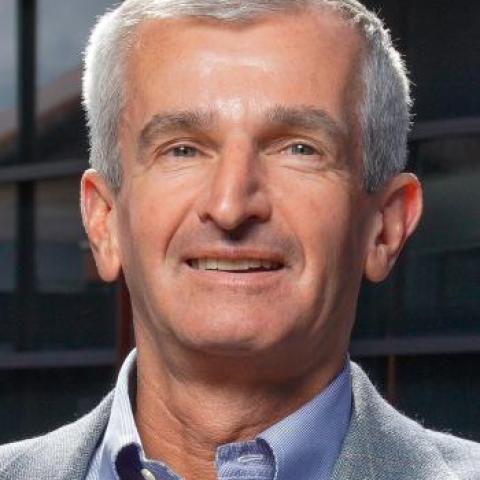
Professor of Molecular and Cellular Physiology, of Neurology and Neurological Sciences, of Photon Science and, by courtesy, of Structural Biology
Knight Initiative Funded Researchers, Wu Tsai Neuro Faculty Affiliates
Axel Brunger, Ph.D., is at Stanford University, where he is a Professor in the Department of Molecular and Cellular Physiology. He is also an Investigator of the Howard Hughes Medical Institute. Brunger is a member of the National Academy of Sciences and the American Academy of Arts & Sciences. Early in his career, Brunger developed tools for interpreting X-ray crystallography diffraction data that revolutionized structural calculation. In his current research, Brunger applies his expertise in structural biology and biophysics to study the molecular mechanisms of synaptic proteins that enable nerve cell communication. Brunger and his collaborators use biochemical reconstitution, biophysical analyses, and structural biology methods to study the molecular mechanism of neuronal SNAREs, complexin, and synaptotagmin, as well as other factors involved in priming and pre-synaptic plasticity. His group used single-particle electron cryo-microscopy to determine structures of the supercomplex of SNAREs, the ATPase NSF, and the adapter protein α-SNAP. This subnanometer-resolution structure and functional studies revealed first glimpses of the molecular mechanism of NSF-mediated SNARE complex disassembly, which allows SNARE to be recycled for the next round of synaptic vesicle fusion. Recently, Brunger studied the molecular architecture of proteins and protein complexes at the synapse and in synaptic vesicles using cryo-electron tomography, which led to the discovery of new protein-protein interactions.
