

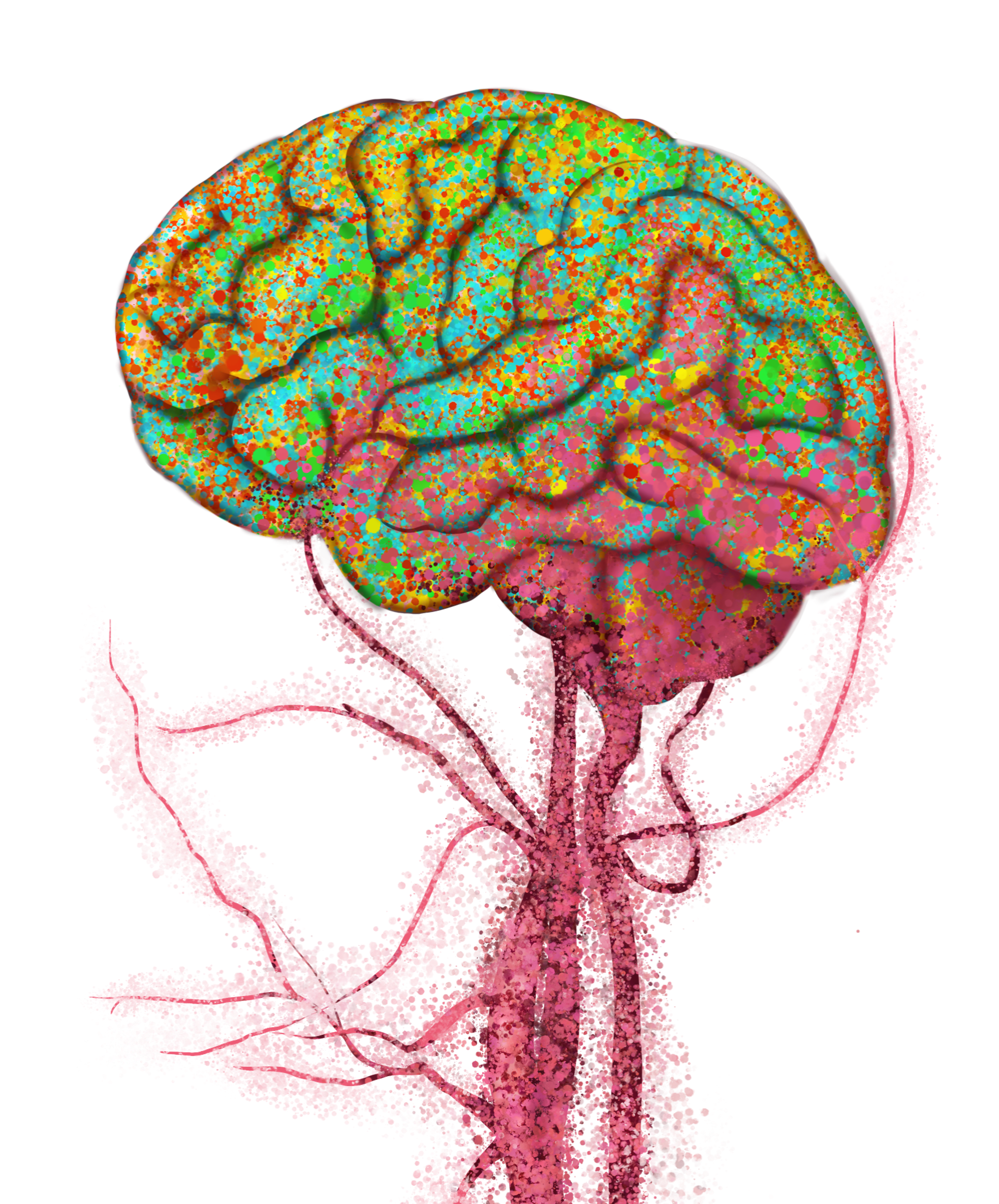
The brain's immune system has long been thought to exist independently from the rest of the body, complete with its own specialized immune cells and a blood-brain barrier that limits what can travel into the brain.
Now, Stanford researchers have found that aging brings with it a large influx of immune cells into the brain, a discovery that not only upends current thinking but could also open new avenues for treating neurological disease. The researchers, whose out-of-the-box work was supported in part by the Knight Initiative for Brain Resilience at the Wu Tsai Neurosciences Institute, described their results July 30, 2026 in the journal Nature.
"We usually think of the brain as a closed system," said Julia Belk, a postdoctoral scholar in pathology at Stanford Medicine and first author on the new study. "What we found is that actually a lot of immune cells enter the human brain during aging."
New to neuroscience
Belk first developed an interest in the brain as a graduate student in the Department of Computer Science in the Stanford School of Engineering. At the time, she was also a trainee with Sarafan ChEM-H’s Chemistry/Biology Interface Predoctoral Training Program, which she described as formative in helping her develop an approach merging basic science, computer science, and medicine.
That program turned out to be a stepping stone to a collaboration with Siddhartha Jaiswal, a senior author on the new study, an associate professor of pathology at Stanford Medicine, and a member of the Institute for Stem Cell Biology and Regenerative Medicine. After analyzing genetic data on thousands of people, some tracked over the course of several decades, the team showed that people with specific clones of immune cells arising from mutated blood stem cells were much less likely than others to get Alzheimer’s – hinting that those cells might interact with the brain.
The team went on to show that some of these mutant cells could somehow make their way into the brain. Although the mutations involved – known as clonal hematopoiesis of indeterminate potential – only affect a minority of people, the finding got the researchers wondering whether this influx of immune cells was occurring in the broader aging population.
“Unlike most immune cells, which are continuously replenished by blood stem cells from the bone marrow, immune cells in the brain were presumed to renew themselves throughout the lifespan without contribution from outside the brain,” said Jaiswal. “Our first study showed that this might not always be the case.”
That idea ran counter to what many others believed – that the brain’s specialized immune cells, called microglia, are all present in the brain from birth, and that no other immune cells migrate in. Now, Belk and colleagues wondered whether such migration was not only possible, but perhaps even a common occurrence in aging.
A cell’s journey
The idea that immune cells in the blood might have something to do with Alzheimer’s was unusual – and controversial – so in 2022 Jaiswal and colleagues sought support from the Knight Initiative for Brain Resilience, which backs research aimed at reshaping the study of brain resilience and neurodegenerative disease.
Supported in part by that Knight Initiative Innovation Award, Belk, Jaiswal, and co-senior author Howard Chang, the Virginia and D. K. Ludwig Professor of Cancer Research and a professor of genetics at Stanford Medicine, set out to see why peripheral immune cells boost Alzheimer’s resilience – but first, they needed to establish whether microglia really do get reinforcements from immune cells in the blood.
To answer the question, they turned to human brain samples. They worked with samples from the Stanford Rapid Autopsy Center, led by co-author Jody Hooper, a professor of pathology at Stanford Medicine, and the University of Washington's Alzheimer's Disease Sequencing Project. Those efforts gather both blood and post-mortem brain tissue samples from people with and without Alzheimer’s, giving the researchers a rare opportunity to compare blood samples directly to post-mortem brain tissue.
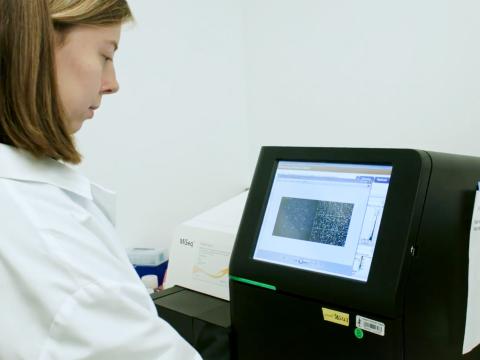
Still, the team needed a way to determine where immune cells in the brain came from. Since immune cells are constantly dividing, this means tracing cells' lineage back to learn whether their ancestors came from the original population of microglia – present in the brain from birth – or from blood stem cells in the bone marrow later in life.
The team's key insight was to study DNA from immune cells in both blood and brain samples, then use shared mutations to trace their lineages – not unlike a consumer ancestry testing service. Mutations build up randomly in our blood stem cells as we age, and the immune cell progeny of those stem cells inherit those mutations. This means that two immune cell populations with the same mutations almost certainly share a common origin, Belk explained. "If we see the same mutations in the blood and in the brain's microglia, then we can be very confident that immune cells in the brain are descendants of those immune cells in the blood," she said.
Building on that idea and drawing on tools from their 2023 study, Belk and colleagues compared immune cells from blood and brain samples and showed there was a match: immune cells had indeed moved from the body into the brain as early as middle age. Additional studies showed that these peripheral immune cells transformed into specialized microglia in the brain. That’s something that doesn’t appear to happen in other species like mice or non-human primates.
Hints of a new approach
In addition to upending previous expectations, the discovery could also be an exciting new avenue for the development of brain-focused immunotherapies, Belk said. "Now that we know that these immune cells actually can get into the brain, we can think about all kinds of new engineering strategies to have those peripheral immune cells do useful things."
For example, researchers could imagine engineering immune cells that can chew up amyloid and tau aggregates associated with neurodegenerative disease, then deliver these to people as a preventative measure before the aggregates start to build up.

Since many of the microglia in aging humans seem to be derived from blood stem cells, the discovery also opens up a new line of investigation into how factors that influence blood or bone marrow cells could impact the brain. “Our findings suggest that the life history of blood stem cells could influence the risk of brain diseases by altering the microglia,” Jaiswal said.
Beyond that, Belk highlighted the excitement of identifying a new aspect of human neuroscience. "I think this is exciting because this is also a uniquely human feature of aging that we had no idea about."
Publication details
Research Team
Study authors were Julia A. Belk, Yaowen Zhang, Lisa Ma, Raja Kalluru, Emily E. Reilly, Jacob Weiss, Debasmita Paul, Syed Bukhari, Dipabarna Bhattacharya, Matthew R. Chrostek, Daniel C. Nachun, Christopher M. Arends, Jayakrishnan Gopakumar, Isak W. Tengesdal, Ademar Bynum, Shaneice Mitchell, Katalin Sandor, Inma Cobos, Donald E. Born, Hannes Vogel, Thomas J. Montine, and Jody E. Hooper from the Department of Pathology at Stanford Medicine; Quanming Shi, Rui Li and Arnav Chakravarthy from the Department of Dermatology; Alejandro Medina Enciso from the Department of Pathology and Sarafan ChEM-H; Anna E. Eastman, Nicole Womack-Gambrel, Suyash Raj and Irving L. Weissman from the Institute for Stem Cell Biology and Regenerative Medicine at Stanford Medicine; Daniel Richard and Anne Brunet from the Department of Genetics at Stanford Medicine; Howard Y. Chang from the Departments of Genetics and Pathology and Amgen Research; Siddhartha Jaiswal from the Department of Pathology and the Wu Tsai Neurosciences Institute; Simone Brioschi and Marco Colonna from Washington University in St. Louis; Badri N. Vardarajan from Columbia University; and C. Dirk Keene from the University of Washington.
Research Funding
The study was supported by grants from the Ludwig Cancer Center Research at Stanford University, Burroughs Wellcome Fund Career Award for Medical Scientists, Phil and Penny Knight Initiative for Brain Resilience at Stanford University, the National Institutes of Health (DP2-HL157540, 1R01AG088656, 1R01AG088657), an HHMI Hanna Gray Fellowship. Cell sorting for this project was done on instruments in the Stanford Shared FACS Facility. The UW BioRepository and Integrated Neuropathology (BRaIN) Laboratory and Precision Neuropathology Core are supported by the NIH via the UW Alzheimer’s Disease Research Center (P30 AG066509), the ACT study (U19 AG066567), the BRAIN Initiative Cell Atlas Network (UM1 MH130981 and UM1MH134812), the Seattle Alzheimer’s Disease Brain Cell Atlas (U19AG060909), multiple collaborative projects (U24AG072458; U24NS133949; U24NS133945; U24NS135651; U01NS137500; and U01NS137484), the US Department of Defense (DoD W81XWH-21-S-TBIPH2) and the Allen Institute for Brain Science.
Competing Interests
Chang is an employee and stockholder of Amgen as of Dec. 16, 2024, a co-founder of Accent Therapeutics, Boundless Bio, Cartography Biosciences, and Orbital Therapeutics, and was an advisor of Arsenal Biosciences, Chroma Medicine, Exai Bio and Vida Ventures until Dec. 15, 2024. Jaiswal has received consulting fees from Merck and AstraZeneca, has received honoraria from GSK, and is on the scientific advisory boards and holds equity in Big Sur Bio and Bitterroot Bio, all unrelated to the present work. The remaining authors declare no competing interests.
