The discovery from an unusual team of computer scientists and pathologists overturns longstanding dogma – and could point the way toward new therapies for neurodegenerative disease
A study of killifish reveals how protein dysfunction develops in vertebrate brain cells, a key driver of aging – shedding light on cognitive decline and diseases like Alzheimer’s, Parkinson’s, and ALS.
Stanford researchers reviewed over 400 therapy evaluations and discovered a crucial mismatch: Mouse studies test disease prevention, while human trials test treatment of existing disease.
Knight Initiative researchers used a new lab model of aging human neurons to show that as cells age, lysosomes fall into disrepair and waste builds up—feeding a damaging cycle that could lead to Alzheimer’s.
Blood and cerebrospinal fluid markers tied to inflammation and metabolism sort some patients into subgroups, according to Knight Initiative researchers, a step toward predicting progression and tailoring care.
The technique, which used genetically healthy donor cells, prolonged life and function in mice with a disease similar to Tay-Sachs. It may help with other neurodegenerative diseases like Alzheimer’s.
The Global Neurodegeneration Proteomics Consortium gathered a trove of data on potential signs of neurological disease—and researchers including Knight Initiative director Tony Wyss-Coray are already using it to make new discoveries.
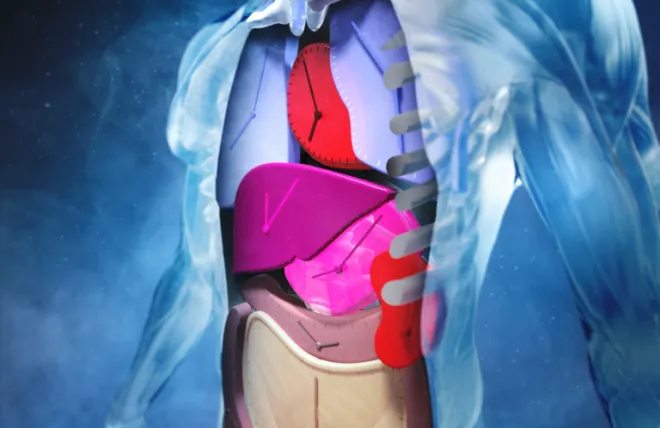
A blood-test analysis developed at Stanford Medicine can determine the “biological ages” of 11 separate organ systems in individuals’ bodies and predict the health consequences.
Research from the Giocomo lab finds that mice create neural maps of the location of rewards, distinct from the well-known hippocampal maps of an animal's location in space.
Improving cells’ ability to sort and recycle components—including cholesterol—could lead to therapies for a wide range of neurodegenerative conditions.
A new analysis of a vaccination program in Wales by a Knight Initiative–supported team found that the shingles vaccine appeared to lower new dementia diagnoses by 20% — more than any other known intervention.
New findings about the sugary armor on the brain’s frontline cells could shed light on cognitive decline and diseases like Alzheimer’s—and open new avenues for treatment.
What if forgetfulness didn't ahve to be a part of aging? Now, discoveries about the impact of glucose in mouse brains by Knight Initiative affiliate, Anne Brunet, and team suggest routes for eliciting new neuron growth in old brains.
Researchers at Stanford’s Knight Initiative for Brain Resilience merge spatial transcriptomics and AI to uncover how local cellular interactions drive brain aging and resilience
With Knight Initiative support, Stanford researchers uncover a biochemical “off-ramp” in ketosis, rewriting our understanding of how ketosis influences metabolism.
A team of neuroscientists at the Knight Initiative for Brain Resilience have zeroed in on a critical regulator of brain metabolism that may be over-activated in the brains of patients with Alzheimer’s disease.
Groundbreaking research supported by the Knight Initiative for Brain Resilience at Stanford’s Wu Tsai Neurosciences Institute deepens our understanding of how the amino acid taurine may help reduce appetite and prevent obesity.
Most Parkinson’s disease patients struggle with speech problems. New research by Stanford Medicine scientists uncovers the brain connections that could be essential to preserving speech.
Pro-inflammatory protein TREM1 in peripheral immune cells may promote age-related cognitive decline and dementia, according to Knight Initiative–funded research.