Wu Tsai Neuro and Knight Initiative for Brain Resilience affiliate, Michael Greicius, and others share their expertise on the limitations of the Alzheimer's drug Leqembi.
Seven Stanford faculty, including Knight Initiative Director Tony Wyss-Coray, are among the 502 new fellows of the American Association for the Advancement of Science.
Q&A with Wu Tsai Neuro affiliate Kathleen Poston about her work past and present on Parkinson’s disease. Poston studies the pathophysiology underlying the cognitive, behavioral and motor symptoms characteristic of Parkinson’s.
Pro-inflammatory protein TREM1 in peripheral immune cells may promote age-related cognitive decline and dementia, according to Knight Initiative–funded research.
Recent research supported by the Knight Initiative has identified a link between lipid droplets in the microglia to a known genetic risk factor for AD.
Two new studies supported by the Knight Initiative highlight groundbreaking new early biomarkers for the diagnosis and treatment of neurodegenerative disease.
Research supported by the Knight Initiative found that metformin, a commonly prescribed diabetes drug associated with moderate weight loss, stimulates the production of lac-phe, a molecule abundant after exercise.
A few closely related drugs, all squarely aimed at treating Alzheimer’s disease, have served up what can be charitably described as a lackadaisical performance. Wu Tsai Neuro and Knight Initiative affiliate Mike Greicius explains why.
This week on From Our Neurons to Yours, we sit down with Stanford neurologist Kathleen Poston to learn about a sea change in our understanding of Parkinson's Disease.
Knight Initiative Innovation Grant awardee and Wu Tsai Neuro affiliate Jonathan Long received a Sloan Research Fellowship, which recognizes outstanding early-career faculty with the potential to revolutionize their fields of study.
Leaders of the Wu Tsai Neurosciences Institute reflect on a decade of boundary-breaking study of the brain and what lies ahead for Stanford’s widespread neurosciences community.
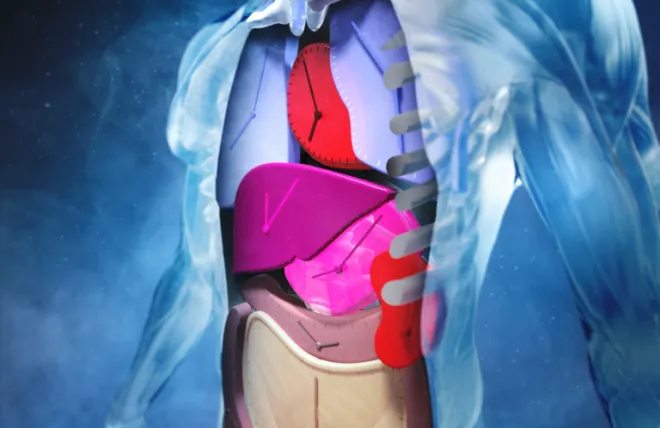
How to know if your organs are ‘older’ than you are, and ways to slow down biological aging according to Knight Initiative director Tony Wyss-Coray and others.
Knight Initiative director Tony Wyss-Coray and others are leading the development of a test measuring organ-specific proteins in the blood as a simple and sensible way to estimate biological age.
We are proud to welcome the 2024 Neurosciences Postdoctoral Scholars — ten young scientists pursuing novel, multi-disciplinary approaches to understanding the workings of the brain.
Students learned how behind every success is a story of perseverance, frustration, and failure in a fall quarter class featuring Stanford’s own Nobel laureates and MacArthur “genius” fellows, including Wu Tsai Neuro affiliate Michelle Monje.