


Each year, researchers across Stanford’s seven schools advance our understanding of the mind and brain through research ranging from biochemistry to behavior and beyond.
Below we have compiled some of the key studies we covered here at Wu Tsai Neuro and the Knight Initiative in 2025 to give a (very partial) overview of the impact of our community’s research efforts this past year:
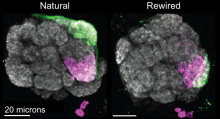
How to rewire a fruit fly brain
Nov 26 2025 | Wu Tsai Neurosciences Institute
Wu Tsai Neuro researchers reprogrammed fruit fly brain development and behavior using new discoveries about how attractive and repulsive molecules build neural circuits
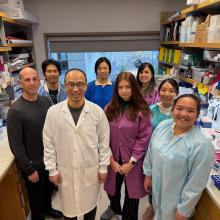
Q&A: A key protein may point toward new diagnostics and treatments for ALS and dementia
Nov 21 2025 | Knight Initiative for Brain Resilience
Amyotrophic lateral sclerosis and frontotemporal dementia are devastating neurodegenerative diseases. Knight Initiative postdoc Yi Zeng is working to understand the role a central protein plays in both diseases—and whether it might point toward new diagnostics and treatments
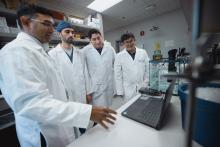
A new ultrasound technique could help aging and injured brains
Nov 10 2025 | Knight Initiative for Brain Resilience
Neuroradiologist Raag Airan and his lab have found a non-invasive, drug-free method to help clean the brain, reduce inflammation, and treat disease—and with Knight Initiative for Brain Resilience support, they plan to test it in people soon.

Groove is in the brain: Music supercharges brain stimulation
Sep 22 2025 | Wu Tsai Neurosciences Institute
What could make a promising approach to psychiatry and brain research even better? A solid beat.
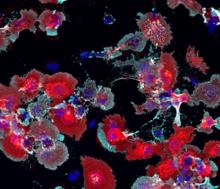
Building bridges between Alzheimer’s theories
Sep 15 2025 | Knight Initiative for Brain Resilience
A new study finds links between two popular models of the disease—and the results could change how researchers think about treatment.
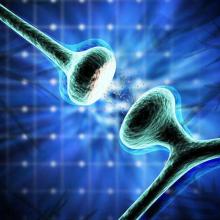
Rethinking how we learn to move in the world
Sep 8 2025 | Knight Initiative for Brain Resilience
Knight Initiative researchers are uncovering the fine points of how our brains learn to move. In the long run, their findings could help devise better treatments for Parkinson's disease.
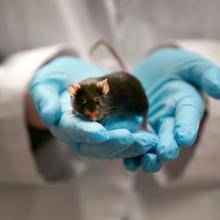
Why promising dementia treatments work in mice but fail in people
Aug 20 2025 | Knight Initiative for Brain Resilience
Stanford researchers reviewed over 400 therapy evaluations and discovered a crucial mismatch: Mouse studies test disease prevention, while human trials test treatment of existing disease.
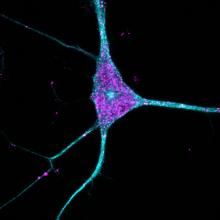
Alzheimer’s may stem from breakdown of “recycling centers” in aging cells
Aug 18 2025 | Knight Initiative for Brain Resilience
Knight Initiative researchers used a new lab model of aging human neurons to show that as cells age, lysosomes fall into disrepair and waste builds up—feeding a damaging cycle that could lead to Alzheimer’s.
Parkinson’s comes in many forms. New biomarkers may explain why.
Aug 13 2025 | Knight Initiative for Brain Resilience
Blood and cerebrospinal fluid markers tied to inflammation and metabolism sort some patients into subgroups, according to Knight Initiative researchers, a step toward predicting progression and tailoring care.
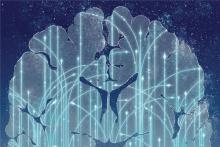
A new consortium opens unexpected windows into neurodegenerative disease
Jul 21 2025 | Knight Initiative for Brain Resilience
The Global Neurodegeneration Proteomics Consortium gathered a trove of data on potential signs of neurological disease—and researchers including Knight Initiative director Tony Wyss-Coray are already using it to make new discoveries.
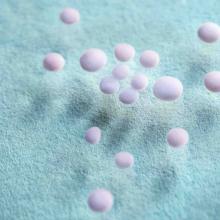
A common food additive solves a sticky neuroscience problem
Jul 15 2025 | Wu Tsai Neurosciences Institute
An interdisciplinary team of Wu Tsai Neuro scientists working on balls of human neurons called organoids wanted to scale up their efforts and take on important new questions. The solution was all around them.
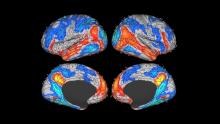
Two roads to memory
Jun 24 2025 | Knight Initiative for Brain Resilience
A new study supported by the Knight Initiative for Brain Resilience reveals how Alzheimer's disease and attention shape our ability to remember.
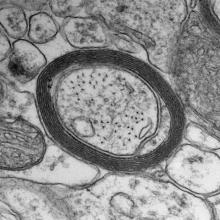
Myelin matters
Jun 20 2025 | Wu Tsai Neurosciences Institute
A decade ago, three generations of Stanford scientists banded together to publish a landmark study on one of the brain’s most prevalent structures. Today, Wu Tsai Neurosciences Institute researchers are discovering that myelin is key to just about every aspect of neurological health.
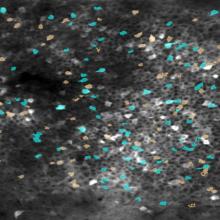
Locations of treats are stored in specialized neural maps
Jun 11 2025 | Wu Tsai Neurosciences Institute
Research from the Giocomo lab finds that mice create neural maps of the location of rewards, distinct from the well-known hippocampal maps of an animal's location in space.
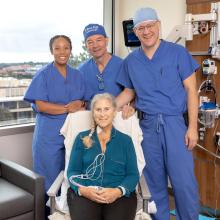
Under the Lights: What Surgery Reveals About Brain Resilience
Jun 4 2025 | Knight Initiative for Brain Resilience
A team at Stanford, supported by the Knight Initiative for Brain Resilience, is using the biology of recovery to uncover why some aging brains withstand stress while others quietly unravel.
Alzheimer's "resilience signature" predicts who will develop dementia—and how fa...
May 14 2025 | Knight Initiative for Brain Resilience
Knight Initiative researchers discover a biomarker in spinal fluid that could help forecast Alzheimer’s progression and improve clinical trials.
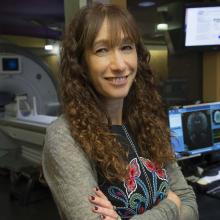
Bridging nature and nurture: The brain's flexible foundation from birth
Mar 17 2025 | Wu Tsai Neurosciences Institute
By studying never-before-seen details of brain connectivity in human infants, researchers at the Wu Tsai Neurosciences Institute have identified how a balance of innate structure and flexible learning produces our remarkably organized visual brains.
Q&A: Unraveling the role of endocannabinoid metabolism in brain aging
Jan 27 2025 | Knight Initiative for Brain Resilience
Research supported by a Knight Initiative Catalyst Grant explores whether targeting pathways related to the brain’s “chill-out” system could restore youthful resilience and improve cognitive function.
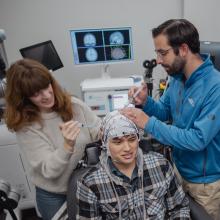
Non-invasive brain stimulation opens new ways to study and treat the brain
Jan 24 2025 | Wu Tsai Neurosciences Institute
A new generation of researchers at Stanford’s Wu Tsai Neurosciences Institute is developing tools to modify brain activity for research and clinical applications—without drilling through the skull.
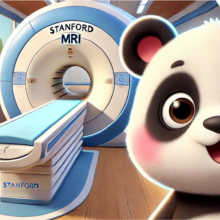
Stanford researchers launch free VR app preparing kids for MRI scans
Jan 13 2025 | Wu Tsai Neurosciences Institute
Stanford University researchers have released a groundbreaking virtual reality (VR) application designed to help children prepare for MRI at Stanford Children's Health.
Banner Illustration generated using GPT4o and Dall-E-3 via Stanford's AI Playground.