


Only one in about 10,000 people will reach age 100 cognitively unscathed. Since 2022, the Phil and Penny Knight Initiative for Brain Resilience at Stanford’s Wu Tsai Neurosciences Institute has been working to understand what makes that kind of longevity possible—and what could be done to extend it to more people.
Knight Initiative research defies boundaries. Scientists supported by the initiative analyze “natural experiments” in public health to understand beneficial effects of vaccines on brain aging, investigate the inner workings of cells’ recycling centers to understand the origins of neurodegeneration, and study short-lived fish to understand the trajectory of natural aging. They frequently collaborate with researchers across wide-ranging research disciplines and departmental boundaries.
But broadly speaking, brain resilience research focuses on three key questions: What’s the link between the biology of aging and the risk of neurodegenerative disease? What makes some brains more resilient than others in the face of similar genetic or environmental stress? And how might we intervene to enhance resilience and treat or even prevent diseases like Alzheimer’s, Parkinson’s, and ALS?
Below, we’ve compiled some of the Knight Initiative research we’ve reported on in the Initiative’s first four years that best reflects these core intellectual themes and their potential impact on the science of brain resilience.
A New Science of Aging and Neurodegeneration
Changes in brain’s ‘sugar shield’ could be key to understanding effects of aging
Feb 26 2025
New findings about the sugary armor on the brain’s frontline cells could shed light on cognitive decline and diseases like Alzheimer’s and open new avenues for treatment
Alzheimer’s risk gene tied to fatty blobs in brain’s immune cells
Mar 20 2024
Could lipid droplets in microglia tie together the many threads of Alzheimer’s biology?
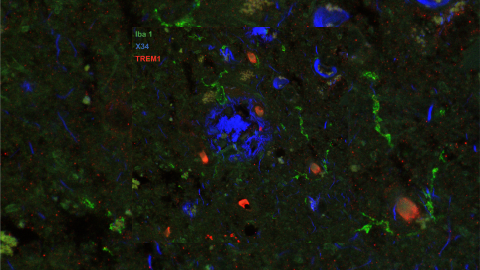
Research links age-related inflammation, microglia and Alzheimer’s Disease
Mar 27 2024
Pro-inflammatory protein TREM1 in peripheral immune cells may promote age-related cognitive decline and dementia, according to Knight Initiative–funded research
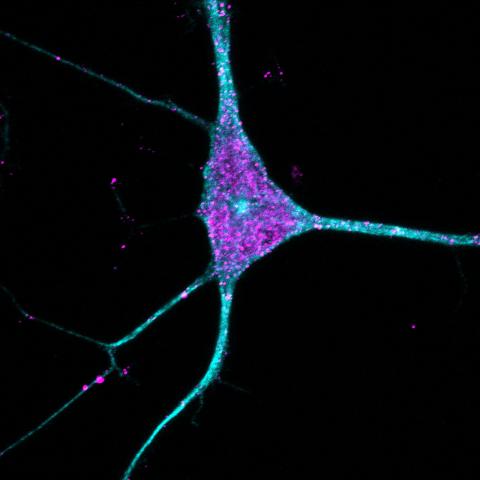
Alzheimer’s may stem from breakdown of “recycling centers” in aging cells
Aug 18 2025
Knight Initiative researchers used a new lab model of aging human neurons to show that as cells age, lysosomes fall into disrepair and waste builds up—feeding a damaging cycle that could lead to Alzheimer’s
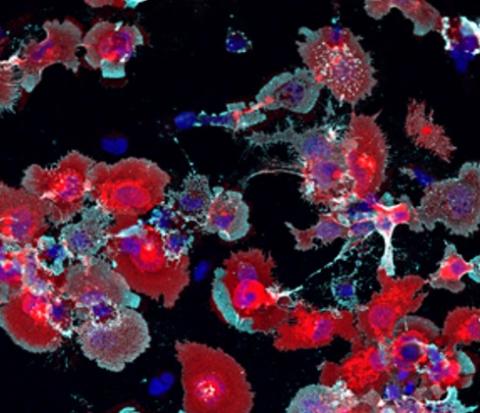
Building bridges between Alzheimer’s theories
Sep 15 2025
A new study finds links between two popular models of the disease – and the results could change how researchers think about treatment

Alzheimer’s and Parkinson’s biomarkers show promise for early diagnosis
Mar 19 2024
Two new studies supported by the Knight Initiative highlight groundbreaking new early biomarkers for the diagnosis and treatment of neurodegenerative disease
Parkinson’s comes in many forms. New biomarkers may explain why
Aug 13 2025
Blood and cerebrospinal fluid markers tied to inflammation and metabolism sort some patients into subgroups, according to Knight Initiative researchers, a step toward predicting progression and tailoring care
Promoting Brain Resilience
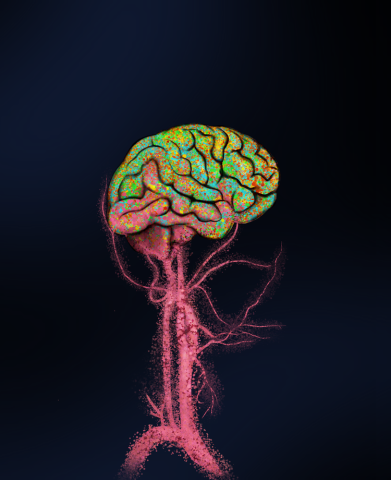
Blood Cells Mutated in Old Age Protect Against Alzheimer’s Disease
Aug 24 2023
Pathologist Siddhartha Jaiswal discovers a surprising twist to our biology: Age-related mutations that increase the risk of blood disease also protect against brain disease

Knight-funded research uncovers gene mutations that may prevent Alzheimer’s Disease
Feb 22 2024
Disabling the notorious APOE4 gene might protect against the disease, according to data from a massive genetic dataset

Alzheimer's "resilience signature" predicts who will develop dementia – and how fast
May 14 2025
Knight Initiative researchers discover a biomarker in spinal fluid that could help forecast Alzheimer’s progression and improve clinical trials
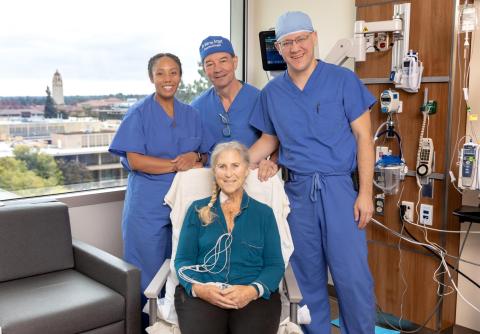
Under the Lights: What Surgery Reveals About Brain Resilience
Jun 4 2025
A team at Stanford, supported by the Knight Initiative for Brain Resilience, is using the biology of recovery to uncover why some aging brains withstand stress while others quietly unravel
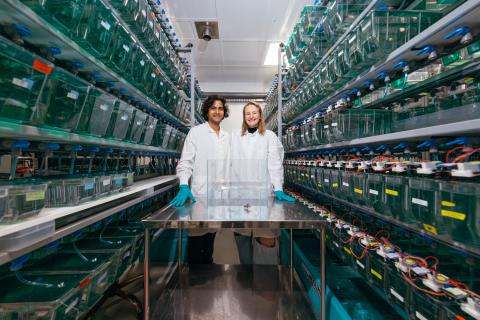
Watching a lifetime in motion reveals the architecture of aging
Mar 12 2026
Knight Initiative scientists tracked every moment of the life of the African turquoise killifish, showing that behavior alone can forecast whether an animal will live a long or short life
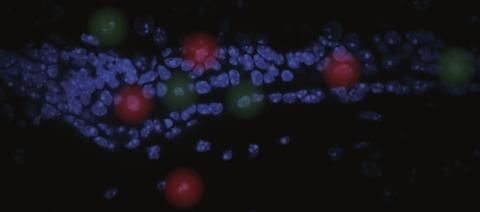
Blight or Benefit: How Cellular Neighbors Shape the Aging Brain
Dec 19 2024
Researchers at Stanford’s Knight Initiative for Brain Resilience merge spatial transcriptomics and AI to uncover how local cellular interactions drive brain aging and resilience
Innovations in Prevention and Treatment
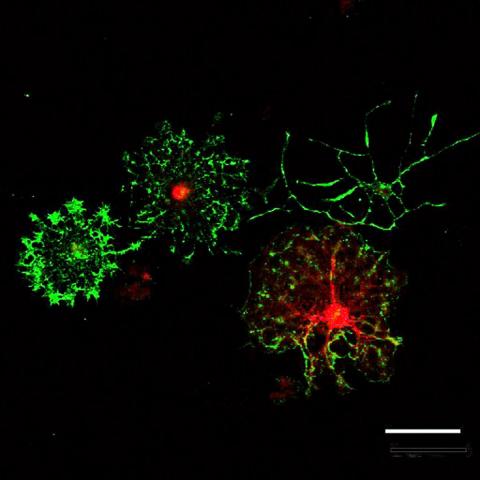
Surprising finding links sleep, brain insulation, and neurodegeneration
Oct 30 2023
Erin Gibson’s lab has discovered that the precursor cells to myelin-producing oligodendrocytes are regulated by the circadian system in mice. When that regulation breaks down, the researchers saw abnormal myelination – but also fragmented sleep
Drugs that improve brain metabolism could help Alzheimer’s patients
Aug 22 2024
Targeting a metabolic pathway well-known in cancer research, neuroscientists at Stanford believe they may have found a way to improve brain performance in Alzheimer’s patients
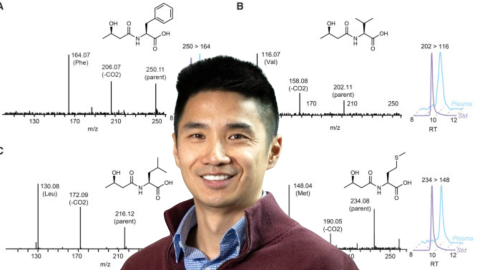
Unlocking the secrets of ketosis
Nov 12 2024
Researchers at Stanford uncover a biochemical “off-ramp” in ketosis, rewriting our understanding of how ketosis influences metabolism
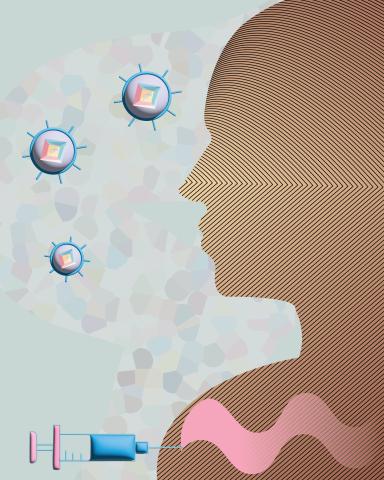
Study strengthens link between shingles vaccine and lower dementia risk
Apr 2025
A new analysis of a vaccination program in Wales found that the shingles vaccine not only appeared to lower new dementia diagnoses by 20%, it also helped those who already have the disease
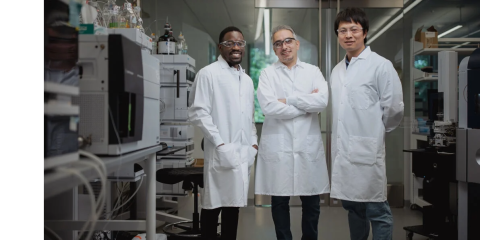
Fixing cellular recycling centers may help treat neurodegenerative diseases
May 7 2025
Improving cells’ ability to sort and recycle components – including cholesterol – could lead to therapies for a wide range of neurodegenerative conditions
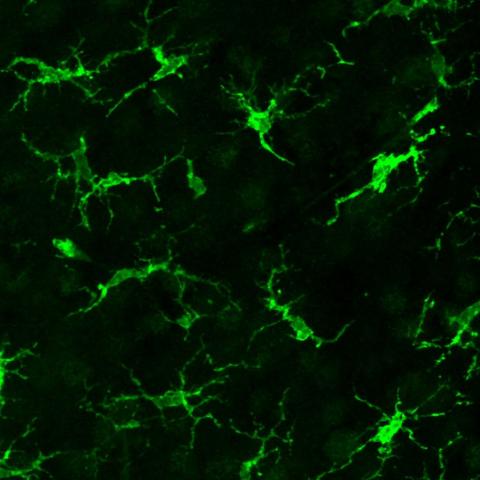
Replacing brain immune cells in mice slows neurodegeneration in Stanford Medicine study
Aug 6 2025
The technique, which used genetically healthy donor cells, prolonged life and function in mice with a disease similar to Tay-Sachs. It may help with other neurodegenerative diseases like Alzheimer’s
A new ultrasound technique could help aging and injured brains
Nov 10 2025
Neuroradiologist Raag Airan and his lab have found a non-invasive, drug-free method to help clean the brain, reduce inflammation, and treat disease – and with Knight Initiative for Brain Resilience support, they plan to test it in people soon