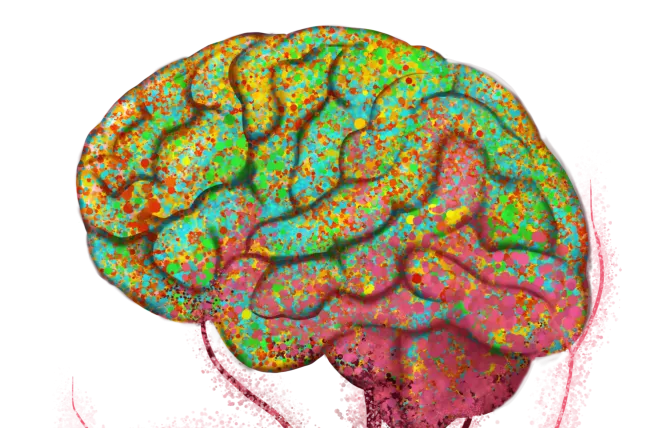
A study of killifish reveals how protein dysfunction develops in vertebrate brain cells, a key driver of aging – shedding light on cognitive decline and diseases like Alzheimer’s, Parkinson’s, and ALS.
Knight Initiative researchers used a new lab model of aging human neurons to show that as cells age, lysosomes fall into disrepair and waste builds up—feeding a damaging cycle that could lead to Alzheimer’s.
Blood and cerebrospinal fluid markers tied to inflammation and metabolism sort some patients into subgroups, according to Knight Initiative researchers, a step toward predicting progression and tailoring care.
The technique, which used genetically healthy donor cells, prolonged life and function in mice with a disease similar to Tay-Sachs. It may help with other neurodegenerative diseases like Alzheimer’s.
Andreasson received the Inge Grundke-Iqbal Award for her work on restoring cognition in Alzheimer's. Karly Cody, a postdoctoral fellow in the lab of Knight Initiative researcher Elizabeth Mormino, was also honored.
Is your brain aging faster than your chronological age? New research shows it could raise your risk of death and dementia significantly—and offers promise for early intervention.
Knight Initiative-funded research ran the gamut from chemistry to public health, but one theme brought it all together: Studying what makes the brain resilient will help more people live better lives.
The findings of two recent studies give hope that the disease could one day be reversed in humans—but experts warn that this complex disease will likely need multiple complementary treatments.
A blood-test analysis developed at Stanford Medicine can determine the “biological ages” of 11 separate organ systems in individuals’ bodies and predict the health consequences.
Scientists in the lab of chemical engineer Monther Abu-Remaileh are uncovering the cellular functions that go awry in degenerative brain disorders and identifying therapies that could treat them.
A decade ago, three generations of Stanford scientists banded together to publish a landmark study on one of the brain’s most prevalent structures. Today, Wu Tsai Neurosciences Institute researchers are discovering that myelin is key to just about every aspect of neurological health.
Improving cells’ ability to sort and recycle components—including cholesterol—could lead to therapies for a wide range of neurodegenerative conditions.
A new analysis of a vaccination program in Wales by a Knight Initiative–supported team found that the shingles vaccine appeared to lower new dementia diagnoses by 20% — more than any other known intervention.
Knight Initiative–supported research by Pascal Geldsetzer and colleagues adds to evidence that preventing the viral infection can help stave off cognitive decline.
This week on the podcast, Stanford psychiatry professor Erin Gibson joins us again to share the latest findings on sleep, myelin, and neurodegenerative disease.